
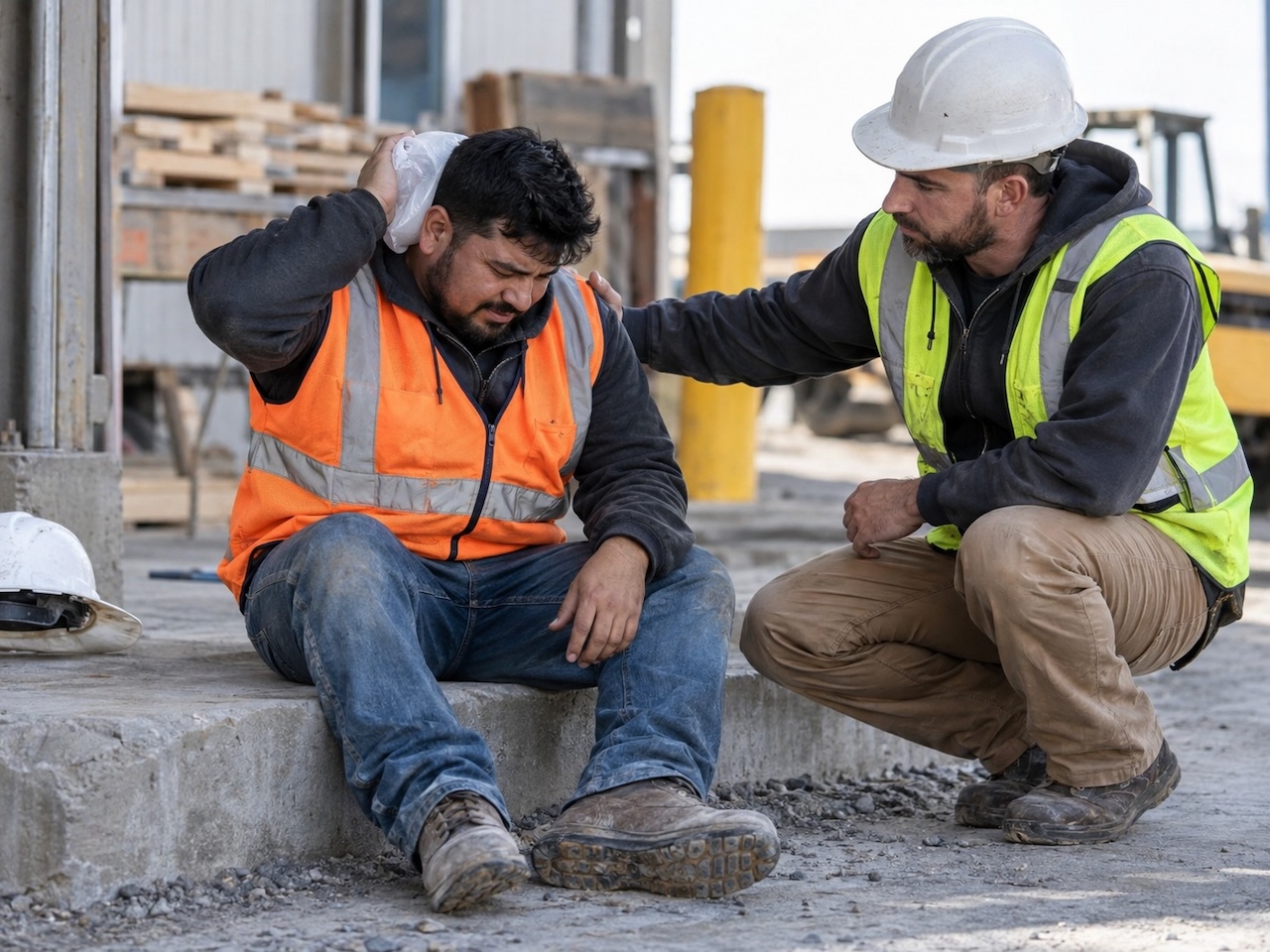
A Hit to the Head Can Still Be a Serious Workplace Injury
A warehouse worker gets struck by a falling box. A construction worker falls from a ladder. A delivery driver is rear-ended while making a work-related stop. None of them needs to lose consciousness, suffer a visible wound, or have an abnormal brain scan to end up with a concussion that makes working difficult.
National Concussion Awareness Day takes place every September, which makes this a good time to recognize how easily these injuries can be underestimated. The CDC identifies construction, freight trucking, warehouse work, professional driving, and several other occupations as jobs with an elevated risk of traumatic brain injury.
A concussion can qualify for Ohio workers' compensation when it arises out of and occurs in the course of employment. The harder part is often proving exactly what condition the worker suffered, connecting it to the workplace incident, and protecting benefits when symptoms such as headaches, concentration problems, dizziness, or fatigue persist after the initial injury.
Hochman & Plunkett Co., L.P.A. has represented injured Ohio workers since 1969. Our attorneys know that a concussion claim can become disputed precisely because much of the injury is experienced rather than seen. We help workers build the medical and factual record, respond to disputed claim decisions, and pursue the treatment and compensation available under Ohio law.
Key TakeawaysA Concussion Can Qualify for Ohio Workers' Comp: Ohio law does not require a broken bone, open wound, or abnormal scan. The injury generally must arise out of and occur in the course of employment.
A Normal CT Scan Does Not Rule Out a Concussion: The CDC notes that a brain scan usually is not needed to identify a mild traumatic brain injury or concussion.
Symptoms Can Appear Later: Headaches, concentration problems, memory changes, dizziness, fatigue, and other concussion symptoms may not become noticeable until hours or days after the injury.
Medical Documentation Matters: The diagnosis, reported mechanism of injury, symptoms, work restrictions, treatment, and medical opinion connecting the condition to the workplace event can all affect whether the claim is allowed.
Ohio Has a One-Year Filing Rule: R.C. 4123.84 generally requires notice of the injured body part within one year after the workplace injury, subject to statutory exceptions.
What Makes a Concussion a Compensable Ohio Work Injury?
Ohio's definition of an injury is broader than many workers realize. Under Ohio Revised Code § 4123.01, an injury can qualify when it is received in the course of and arises out of the worker's employment.
That means the question usually isn't whether the injury is visible. It is whether the employment created the circumstances in which the concussion occurred and whether the medical evidence connects the diagnosed condition to that event.
Common workplace scenarios can include:
- Falling Objects: Tools, boxes, merchandise, building materials, or unsecured loads can cause serious head injuries from falling objects.
- Falls: A worker may strike their head after falling from a ladder, scaffold, loading dock, stairway, or same-level surface.
- Vehicle Crashes: Drivers and other employees can suffer concussions in collisions that occur while they are performing work duties or traveling for work.
- Equipment Accidents: Forklifts, machinery, moving loads, and other workplace equipment can strike or throw a worker.
- Direct Blows or Jolts: A concussion can result from a blow to the head or from a hit to the body that causes the head and brain to move rapidly back and forth.
A workers' compensation lawyer can help identify the exact condition that should be included in the claim and make sure the incident description, medical diagnosis, and causation evidence tell the same story.
Why a Normal Scan Does Not Necessarily Defeat a Concussion Claim
One reason concussion claims become disputed is that people expect a brain injury to appear clearly on imaging.
That is not how concussions are ordinarily diagnosed. The CDC explains that CT scans generally are not needed to identify a mild traumatic brain injury or concussion. Imaging may instead be used when providers are concerned about bleeding or another more serious structural injury.
Doctors may diagnose a concussion by considering the mechanism of injury, symptoms, neurological findings, cognitive functioning, balance, memory, concentration, and other clinical information.
For an Ohio workers' comp claim, that makes the medical record especially important. If the only thing documented immediately after an accident is "headache," but the worker later receives a concussion diagnosis, additional medical evidence may be needed to connect that diagnosis to the workplace event.
An attorney can review the allowed conditions in the claim and determine whether additional medical evidence or a request to recognize another condition is needed rather than assuming that a normal scan ends the case.
Which Concussion Symptoms Can Affect a Worker's Ability to Do the Job?
Concussion symptoms don't always appear immediately. The CDC notes that some symptoms may develop or become noticeable hours or days later. They can affect how someone feels, thinks, acts, and sleeps.
- Headaches or Pressure in the Head: Persistent pain can interfere with concentration, physical activity, and tolerance for noise or screens.
- Memory and Concentration Problems: A worker may struggle to follow instructions, remember tasks, process information, or maintain attention.
- Dizziness or Balance Problems: These symptoms can make ladders, machinery, driving, warehouse work, and other safety-sensitive duties dangerous.
- Sensitivity to Light or Noise: Bright workspaces, screens, machinery, alarms, or busy environments may worsen symptoms.
- Fatigue and Sleep Changes: A worker may have less stamina, need more breaks, or struggle to maintain a normal schedule.
- Mood or Emotional Changes: Irritability, anxiety, sadness, or feeling unusually emotional can also occur during recovery.
Anyone who believes they may have suffered a concussion should be evaluated by a health care provider, and the CDC recommends immediate emergency care when concussion danger signs are present. A worker should also tell the provider exactly how the workplace incident occurred so the medical record reflects the connection from the beginning.
Why Do Ohio Concussion Claims Get Disputed?
There is not one single insurance adjuster controlling every Ohio workers' compensation claim.
For many employers, the Ohio Bureau of Workers' Compensation administers the claim and a managed care organization coordinates medical care. Self-insured employers handle their own workers' compensation claims more directly. In either system, disagreements can arise over whether the concussion occurred at work, whether the diagnosis is supported, whether ongoing symptoms are related to the allowed injury, or whether additional treatment is necessary.
Common disputes include:
- The Diagnosis Was Delayed: The employer may argue that symptoms reported days later came from something other than the workplace accident.
- Imaging Was Normal: A normal CT scan may be incorrectly treated as proof that there was no concussion.
- There Was a Prior Head Injury: Previous concussions, headaches, migraines, or other conditions may be raised as alternative explanations for current symptoms.
- The Incident Was Not Clearly Documented: Disagreement about how the accident happened can create a causation fight.
- Ongoing Treatment Is Challenged: Even after a claim is allowed, disputes can develop over whether additional medical treatment remains necessary.
A denied or disputed claim is not necessarily the end of the process. Ohio workers have rights to challenge adverse decisions, and some workers' compensation appeals have very short deadlines. Getting a lawyer involved quickly can help identify what is being disputed and what medical or factual evidence is needed before an appeal deadline passes.
What Evidence Can Strengthen an Ohio Concussion Claim?
Because a concussion often cannot be established by one scan or test, the strength of the claim may come from how well several different forms of evidence fit together.
- Prompt Medical Evaluation: An early medical visit documents symptoms and gives a provider an opportunity to determine whether the worker suffered a concussion or another head injury.
- Accurate Incident Report: A written account can preserve how the blow, fall, collision, or jolt occurred before memories fade or details become disputed.
- Medical Diagnosis and Causation Opinion: Medical evidence can connect the diagnosed concussion and related symptoms to the workplace event rather than another condition.
- Follow-Up Treatment Records: Continued records can show whether headaches, cognitive problems, dizziness, fatigue, or other symptoms persisted during recovery.
- Work Restrictions: A doctor may document whether the worker should avoid driving, heights, machinery, screens, heavy physical activity, or other job duties while recovering.
- Witness or Coworker Evidence: Coworkers may help establish how the accident occurred and describe what the worker was like immediately afterward.
A lawyer can review those records together instead of looking at each one in isolation. That can matter when an employer accepts that an accident happened but disputes whether the concussion itself should be recognized in the claim.
What Benefits May Be Available for a Workplace Concussion?
An allowed concussion claim can involve more than payment of the first emergency-room bill.
Depending on the injury, work restrictions, treatment needs, and other eligibility requirements, Ohio workers' compensation may provide medical treatment and various forms of disability or wage-related compensation.
For example, an injured worker may need continuing neurological care, rehabilitation, vestibular therapy, medication, or other treatment that is medically necessary for the allowed condition. Questions about providers, authorization, or disputed care can become part of a claim involving workers' compensation medical benefits.
A concussion can also prevent someone from safely returning to work or reduce what that person can earn during recovery. A workers' compensation attorney can review the restrictions and wage information and determine which forms of compensation may apply instead of allowing the claim to be treated as "medical only" when the injury is affecting the worker's livelihood.
How Long Do You Have to File an Ohio Concussion Claim?
Waiting can create a serious legal problem even when the symptoms are genuine.
Under Ohio Revised Code § 4123.84, a work-injury claim is generally barred unless the statutory notice requirements are satisfied within one year after the injury. The statute contains exceptions involving matters such as wages paid in lieu of compensation and certain actions by self-insured employers.
The First Report of Injury is used to begin the Ohio workers' compensation claim process. The current BWC form also asks for the diagnosed condition and whether the medical provider believes that condition is causally related to the reported workplace accident.
That one-year filing period is not a reason to wait. A delay can make it harder to reconstruct the accident, locate witnesses, obtain workplace video, and create a clear medical record connecting symptoms to the original event. An attorney can help get the correct claim filed and preserve evidence while treatment continues.
Could a Concussion Claim Involve Compensation Beyond Workers' Comp?
Sometimes.
Ohio workers' compensation generally provides benefits without requiring an injured employee to prove that the employer was negligent. But a workplace head injury may involve another legal issue as well.
If someone outside the employer caused the injury, such as another driver, contractor, equipment manufacturer, or property owner, the worker may also have a third-party liability claim. That civil claim can provide forms of compensation that workers' compensation does not, including pain and suffering when the legal requirements are met.
There may also be cases in which an employer violated a specific workplace safety requirement. Ohio's VSSR process can provide an additional workers' compensation award when the required elements are proven.
A lawyer can look beyond the basic claim allowance and determine whether the circumstances of the accident create another source of recovery that would otherwise be missed.
Hochman & Plunkett Knows How to Build Claims for Injuries You Cannot Always See
Hochman & Plunkett Co., L.P.A. has represented injured Ohio workers since 1969. Our attorneys have handled claims before the Ohio Bureau of Workers' Compensation, the Industrial Commission, trial courts, appellate courts, and the Ohio Supreme Court.
Concussion cases require attention to the details insurers, employers, and claim administrators may challenge: how the accident happened, when symptoms appeared, which condition was diagnosed, what the medical evidence says about causation, whether treatment remains necessary, and how the injury is affecting the worker's ability to do the job.
If you suffered a concussion or another head injury at work, contact us for a free case consultation. We can review the claim, medical records, work restrictions, and any BWC or employer decisions and help you pursue the treatment and compensation available under Ohio law.
"After what seemed like an innocuous fall at work, I ended up off work for 4 months... My attorney took care of me." - Kai S., ⭐⭐⭐⭐⭐