
A VSSR Award Is Additional Workers' Compensation, But It Is Not Automatic
Ohio's workers' compensation system generally provides benefits without requiring an injured employee to prove that the employer caused the accident through negligence. Medical benefits, temporary total disability compensation, wage-loss benefits, and other forms of compensation are governed by their own eligibility and calculation rules.
A Violation of a Specific Safety Requirement claim, usually called a VSSR, is different. It seeks an additional award when an injury, occupational disease, or death resulted from an employer's failure to comply with an applicable specific safety requirement designed to protect employees.
The VSSR provision comes directly from Article II, Section 35 of the Ohio Constitution. It authorizes an additional award of between 15% and 50% of the maximum award established by law when the required elements are proven.
Our Ohio workers' compensation attorneys at Hochman & Plunkett Co., L.P.A. look for potential VSSR issues when the circumstances of a workplace injury suggest that a required guard, protective device, procedure, or other specific safety measure may not have been in place. The fact that an accident was preventable, however, isn't enough by itself.
Regular Workers' Compensation And A VSSR Award Serve Different Purposes
| Regular Workers' Compensation | VSSR Award |
|---|---|
| Generally operates without requiring proof that the employer was negligent | Requires proof of an applicable specific safety requirement and the employer's failure to comply |
| Can provide medical and compensation benefits authorized by Ohio workers' compensation law | Adds an additional award of 15% to 50% of the applicable statutory maximum |
| Begins with the underlying workers' compensation claim | Requires a separate VSSR application with the Industrial Commission |
| Focuses on whether the injury or disease is compensable under workers' compensation law | Also requires a causal connection between the safety violation and the injury, disease, or death |
A worker can therefore have an allowed workers' compensation claim without having a viable VSSR claim. A serious workplace accident doesn't establish that the employer violated a specific safety requirement.
The Industrial Commission Sets the VSSR Percentage Between 15% and 50%
Article II, Section 35 of the Ohio Constitution allows the Industrial Commission to add an award of no less than 15% and no more than 50% of the maximum award established by law.
The percentage isn't simply applied to the injured worker's actual paycheck. The VSSR calculation uses the applicable statutory maximum compensation rate tied to the year of injury.
The additional award is connected to compensation paid in the workers' compensation claim. Depending on the benefits involved and the status of the claim, a VSSR order can result in an additional amount based on compensation already paid and additional payments associated with ongoing compensation.
That makes it inaccurate to describe every VSSR as a single fixed lump-sum award or to assume the same VSSR percentage produces the same dollar recovery for every injured worker.
Willful Employer Misconduct Is Not A Required Element Of A VSSR
The original draft drew too close a connection between the percentage awarded and whether the employer's violation was "willful."
An injured worker does not have to prove that the employer deliberately wanted someone to get hurt to establish a VSSR.
Once entitlement has been established, the Industrial Commission has discretion to select a percentage between 15% and 50%. Its current staff hearing officer training materials identify considerations that can include the severity of the injury, the outrageousness of the employer's actions, the number of violations, how dangerous the violation was, and how readily the problem could have been recognized.
Those considerations shouldn't be confused with the elements required to prove the VSSR itself.
A Specific Ohio Safety Requirement Has To Apply To The Work
The word specific in VSSR matters.
It isn't enough to argue that an employer should have maintained a generally safe workplace or that the accident could have been prevented with greater care. The worker needs an applicable safety requirement that prescribed sufficiently specific conduct or protection.
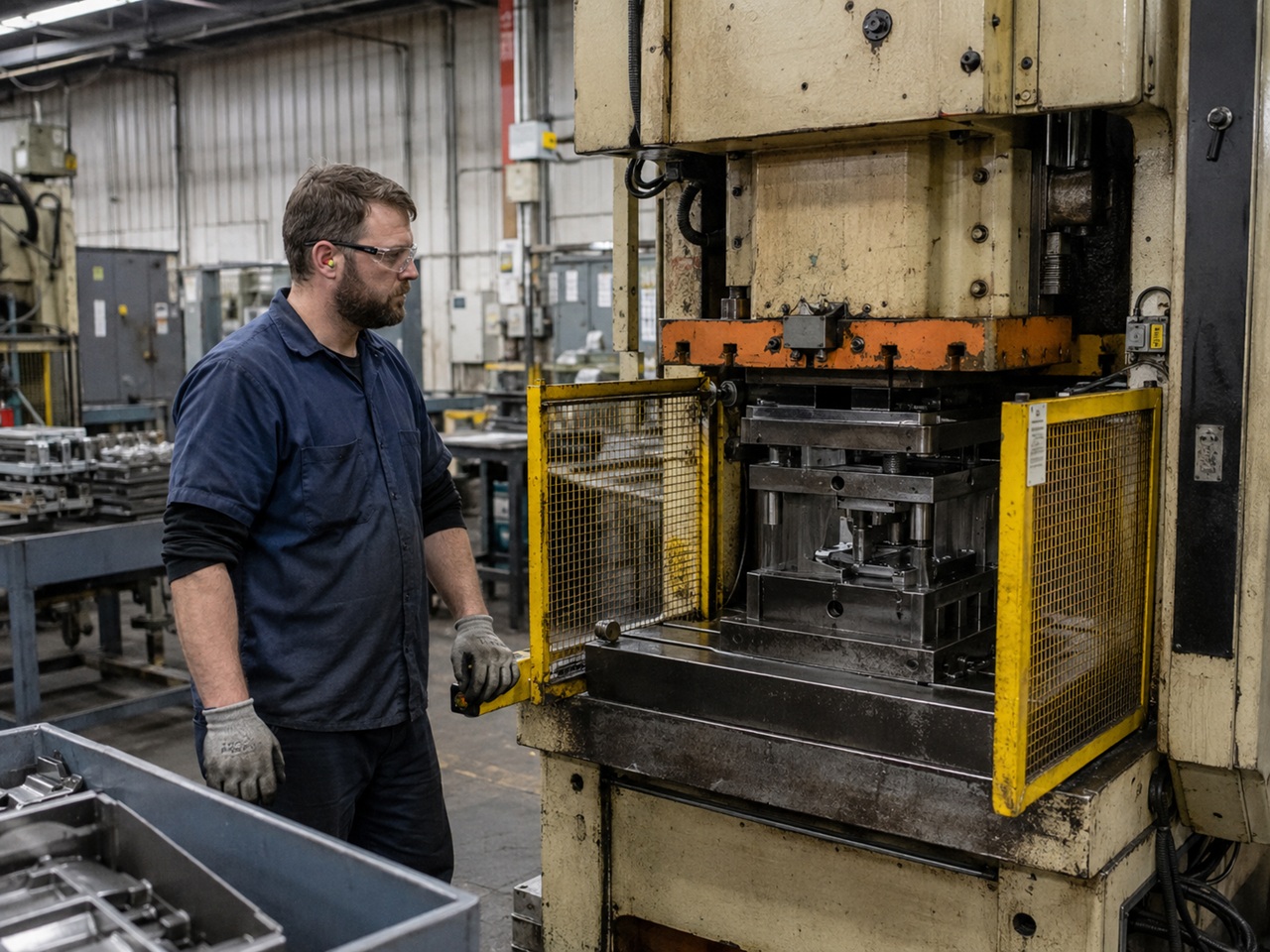
Ohio's Administrative Code contains different safety requirements for different industries, workplaces, machinery, and activities. For example, Ohio has detailed requirements governing mechanical power presses, including guarding and control systems. Construction safety rules address different hazards, including trenches, scaffolds, fall protection, and other worksite conditions.
But even a detailed safety rule can't support a VSSR if it doesn't apply to the employer, equipment, or work being performed.
That issue can be more complicated than it looks. Certain Ohio construction safety rules, for example, have their own scope provisions defining which employers and types of construction activity they govern. A safety rule that sounds relevant from its title may not necessarily apply to the particular job where the injury occurred.
Because a VSSR is treated as a penalty against the employer, Ohio courts strictly construe specific safety requirements and resolve reasonable doubts about their interpretation in the employer's favor.
An OSHA Violation Alone Does Not Establish A VSSR
OSHA and VSSR claims are related, but they aren't interchangeable.
An OSHA safety violation after an Ohio work injury can provide important evidence about workplace conditions. But the Ohio Supreme Court has held that violation of an outside regulation such as an OSHA standard does not, standing alone, provide the specific Ohio safety requirement needed for a VSSR award.
In State ex rel. Richmond v. Industrial Commission, the Court explained that industry standards and another agency's rules can still be considered when interpreting an applicable Ohio safety requirement and evaluating whether an employer complied with it.
The distinction is important. An OSHA citation can support the factual investigation without automatically establishing the legal elements of a VSSR.
A Worker Generally Has To Establish Three Core Points
Ohio Supreme Court decisions describe three core requirements for a VSSR award:
- An Applicable And Specific Safety Requirement Was In Effect: The rule must actually govern the employer, workplace, equipment, or activity involved when the injury occurred.
- The Employer Failed To Comply With That Requirement: The evidence must establish the particular way in which the employer's conduct or equipment failed to satisfy the rule.
- The Failure Proximately Caused The Injury: The safety violation must have a causal connection to the injury, occupational disease, or death for which the additional award is sought.
That last element prevents a VSSR from becoming an automatic penalty for every safety problem uncovered after an accident.
Suppose an investigation shows that a mechanical press lacked a guard required by an applicable Ohio safety rule. If the worker's hand entered the point of operation and the missing guard would have prevented that exposure, causation may be a central part of the VSSR case.
If the same press had an unrelated technical violation but the worker was injured when a completely separate object fell from the ceiling, the existence of the press violation wouldn't establish that it caused the injury.
A Worker's Negligence Does Not Automatically Defeat A VSSR Claim
This is another area where an overly broad statement can lead to the wrong conclusion.
Ohio's specific safety requirements exist in part to protect workers from their own mistakes. As a result, an employer generally can't defeat an otherwise valid VSSR simply by showing that the injured employee could have been more careful.
The Ohio Supreme Court addressed this issue in State ex rel. Sunesis Construction Co. v. Industrial Commission. A construction worker was killed in a trench collapse, and the employer argued in part that the worker had been told not to enter the trench. The Court upheld the VSSR award because evidence supported the findings that applicable trench-safety requirements were violated and that those violations proximately caused the death.
There is, however, a defense sometimes called unilateral negligence.
That defense generally becomes relevant when the employer first complied with the applicable safety requirement, but the employee then unilaterally removed or bypassed compliant safety equipment, refused to use equipment that satisfied the rule, or ignored instructions that would themselves have brought the employer into compliance.
The order of that analysis matters. The question isn't simply whether the employee made a mistake. The first question is whether the employer satisfied the specific safety requirement.
The One-Year VSSR Deadline Can Expire While The Regular Claim Is Still Being Litigated
For injuries occurring on or after September 15, 2020, R.C. 4121.471 generally requires a VSSR claim to be filed within one year after the injury or death, or within one year after disability from an occupational disease begins.
Older information describing a two-year filing period reflects the law that applied to earlier claims.
The current one-year deadline is particularly important because the underlying workers' compensation claim does not necessarily have to be finally decided before that period expires. Industrial Commission guidance specifically recognizes that a worker may need to file the VSSR application to protect the claim even when the underlying workers' compensation claim remains disputed.
The Industrial Commission uses Form IC-8/9 for the application. The form asks for the facts surrounding the injury and the specific Ohio Administrative Code provisions alleged to have been violated.
Waiting for every other issue in the workers' compensation claim to finish can therefore result in losing the VSSR claim before its merits are ever considered.
The Initial VSSR Application Needs Enough Detail To Protect The Claim
The deadline affects more than the date stamped on the application.
Ohio Administrative Code Rule 4121-3-20 requires the application to set out the facts forming the basis of the alleged violation and identify the law or specific safety code sections claimed to have been violated.
Within the applicable limitation period, an application can generally be amended to add additional or alternative violations. Once that period has passed, amendments are more restricted and generally can't be used to introduce a completely unstated claim.
That creates another reason to investigate the equipment, work activity, and applicable safety code early rather than file a generic allegation that the employer simply maintained an unsafe workplace.
Settling The Workers' Compensation Claim Can End The VSSR Issue
This is one of the most consequential VSSR rules for an injured worker to understand.
Ohio Administrative Code Rule 4121-3-20 states that settlement of the underlying workers' compensation claim from which a VSSR application has been or may be filed abates any action on that VSSR application.
In practical terms, settling an Ohio workers' compensation claim without first evaluating a pending or potential VSSR can close off the additional safety-violation award.
A VSSR application can itself be resolved through settlement procedures, but that is different from assuming the VSSR automatically survives settlement of the underlying workers' compensation claim.
This issue should be addressed before an injured worker agrees to a full settlement, not afterward.
A VSSR Claim Is Not The Same As An Employer Intentional Tort Lawsuit
An employer safety violation can also lead injured workers to ask whether they can sue the employer outside the workers' compensation system.
A VSSR and an employer intentional tort are different legal theories with very different standards.
Under R.C. 2745.01, an employer intentional tort generally requires proof that the employer acted with intent to injure or with the belief that injury was substantially certain to occur. For purposes of the statute, "substantially certain" means deliberate intent to cause injury.
The statute creates a rebuttable presumption of intent in certain circumstances involving an employer's deliberate removal of an equipment safety guard or deliberate misrepresentation concerning a toxic or hazardous substance.
A worker doesn't have to satisfy that intentional-tort standard to obtain a VSSR award. Likewise, proving a VSSR doesn't automatically establish a separate intentional tort lawsuit.
Other accidents may involve a third-party claim in addition to workers' compensation when someone outside the injured worker's employer caused or contributed to the injury. That is another separate analysis.
VSSR Evidence Can Change Soon After The Accident
Identifying the correct safety rule is only useful if the evidence shows what actually existed when the worker was injured.
Depending on the accident, relevant evidence can include:
- Photographs and video of the machine, work area, guard, trench, scaffold, or other equipment involved;
- The equipment itself before it is repaired or altered;
- Maintenance and repair records;
- Earlier reports of defective or missing safety equipment;
- Safety inspections and written policies;
- Training records and instructions given to employees;
- Witness accounts from people who saw the accident or the condition beforehand;
- OSHA investigation materials;
- Manufacturer manuals and specifications; and
- Records showing when a safety device was installed, removed, repaired, or replaced.
A guard can be replaced after an injury. A machine can be repaired. A trench can be filled, and a construction site can look completely different within days. Preserving what existed at the time of injury can be essential to establishing both noncompliance and causation.
A Possible Safety Violation Should Be Investigated Before The Deadline Runs
A VSSR is not available simply because an employer could have prevented an accident. Ohio requires an applicable specific safety requirement, proof that the employer failed to comply with it, and evidence that the failure caused the injury.
At the same time, workers shouldn't assume that their own mistake eliminates a VSSR, that an OSHA citation automatically proves one, or that the issue can wait until the rest of the workers' compensation claim is finished.
Our Ohio workers' compensation attorneys can examine the accident, identify potentially applicable safety requirements, preserve evidence, and determine whether a separate VSSR application should be filed within the one-year period.
If you were injured after a guard, protective device, or another required safety measure was missing or inadequate, contact us for a free consultation. We can review both your regular workers' compensation claim and whether the circumstances support an additional VSSR award.
"H&P managed my workers' compensation claim. Every time my employer's workers' comp management company ... tried to deny treatment or compensation, H&P appealed and won. God forbid I ever be injured at work again, but if it does happen, I'm bringing H&P with me." - Andrew J., ⭐⭐⭐⭐⭐